
AI reshaping CCTV versus security guard debate in vacant commercial property
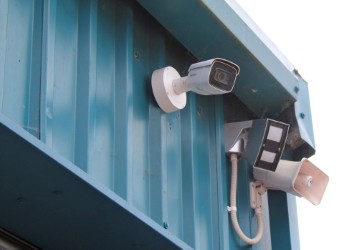
As sectors such as retail, offices and logistics face rising vacancy rates, protecting empty commercial property is becoming more complex and more critical.
Vacant buildings generate no income yet still require protection, so for landlords and property managers the challenge is balancing effective security with tight budgets.
Paul Goossens, operations director at SafeSite Facilities, said: “The question is no longer should I have a security guard or cameras, but how owners of vacant property can deploy the most effective protection strategies.
“Vacant properties present a unique issue. They’re not generating revenue, so every pound spent on security needs to be justified.
“AI enabled CCTV should today be seen as the first line of defence which can provide intelligent filtering of threats, combined with interventions from security guards where necessary.”
Rising risk and changing technology
Last year AXA UK warned of an alarming rise in the number of vacant commercial buildings across the country being targeted by criminal gangs.
The insurer reported cases of fly tipping, theft and vandalism, with damage amounting to hundreds of thousands of pounds.
Despite this, many vacant commercial properties remain under-protected, leaving them vulnerable to theft, vandalism and trespassers.
AI powered systems can now distinguish between genuine threats and environmental triggers such as animals or weather, significantly reducing false alerts.
This allows monitoring teams to focus on credible incidents and respond more quickly.
Some systems are even capable of issuing live, tailored audio warnings to intruders, increasing their deterrent effect and preventing incidents before they escalate.
Cost pressures driving new approaches
Round-the-clock guarding can represent a significant ongoing expense, especially over extended periods.
In contrast, AI-enabled CCTV offers a more flexible and scalable alternative.
Coverage can be adjusted depending on the level of risk, enabling property owners to maintain protection without committing to continuous on-site personnel.
Rather than paying for a permanent presence, security guards can be deployed when required, helping to control costs while maintaining effective protection.
The continued role of security guards
Despite these technological advances, security guards continue to play a vital role.
Their ability to intervene in real time, apply human judgement and de-escalate situations remains difficult to replicate. In higher-risk environments, particularly large commercial sites, a physical presence can also provide reassurance and act as a visible deterrent.
However, guards can only be in one place at a time, are subject to fatigue and represent a significant cost where continuous coverage is needed.
The move towards hybrid security models
Increasingly, the most effective approach is a combination of both CCTV and on-site personnel.
AI-enabled systems act as the first line of defence, providing continuous monitoring, early detection and can escalate threats when needed.
Security personnel can then respond when necessary, focusing their time and expertise where it is most needed.
Goossens added: “For landlords and asset managers, this represents a more strategic way of managing risk.
“The right approach will depend on factors such as how long a property is likely to remain vacant, its location and the level of threat it faces.”
Physical deterrents such as boarding, security doors and fencing still play a crucial role in preventing access, particularly when supported by regular inspections to identify vulnerabilities.
A more strategic security model
Ultimately, the debate is no longer about choosing between CCTV and security guards. As AI continues to evolve, the focus is shifting towards how both can be used together to create a more efficient and cost-effective security model.
For more information, visit: https://www.safesitefacilities.co.uk